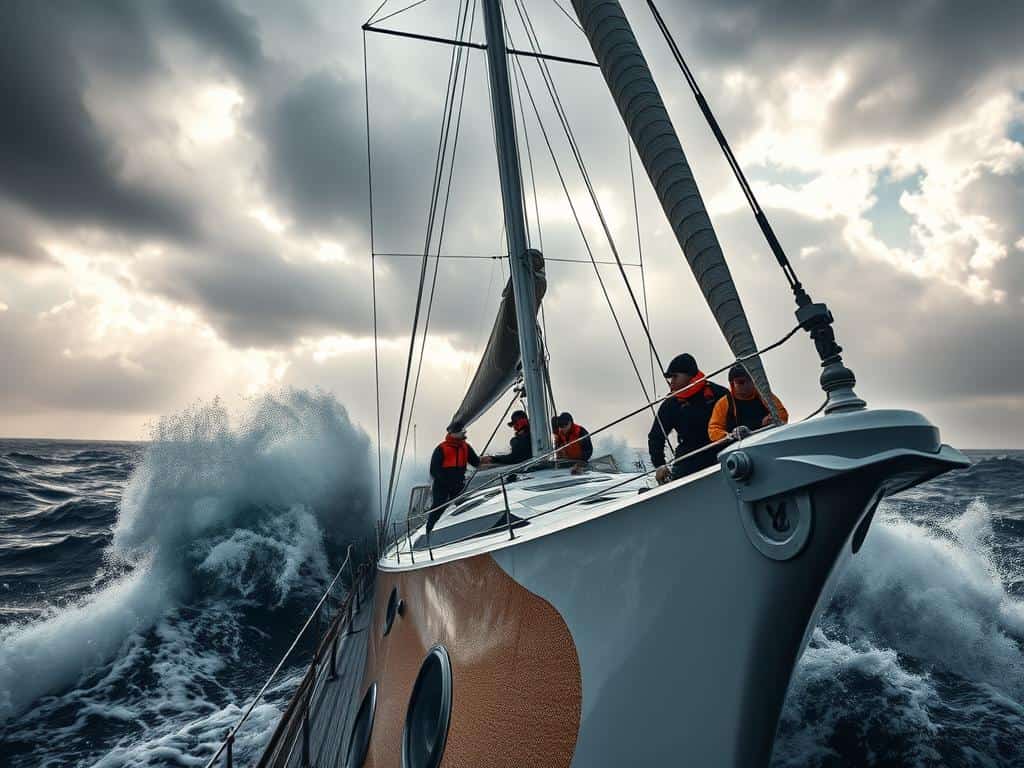
Sailing is a thrilling adventure that I love. But, I remember a scary moment when dark clouds gathered over us. Experienced sailors taught me that being ready for bad weather is more than just knowing how to navigate.
It’s about being fully prepared for storms. In that moment, I learned to stay calm and use important sailing tips and storm survival techniques. We had emergency sails ready and knew how to adjust them quickly.
This showed me how important it is to understand storm conditions and be ready before you go. Being proactive and informed can make a scary situation manageable. It gives every sailor peace of mind when the winds get loud.
Key Takeaways
- Understand storm conditions and recognize weather patterns.
- Always have essential equipment onboard for emergencies.
- Preparing your crew is key for a safe sailing experience.
- Regularly check weather forecasts before departure.
- Remain calm and follow safety protocols when a storm hits.
- Adjusting your sail setup appropriately can enhance stability in rough seas.
Understanding Storm Conditions and Signs
Knowing the signs of changing weather is key for safe sailing. I’ve learned from my time on the water that being aware of weather patterns is vital. Spotting storm signs early helps in getting ready and staying safe when the weather suddenly changes.
Recognizing Weather Patterns
Many sailors miss the importance of small changes in the air. For instance, low, thick clouds often mean bad weather is coming. Also, sudden drops in temperature and changes in wind direction are storm warnings. Knowing these patterns helps in recognizing bad weather and getting ready for storms.
Key Indicators of Bad Weather
While sailing, I watch for signs of storms. Strong winds, changing in strength, warn of weather fronts. Don’t ignore flashes of lightning, as they often mean heavy rain is coming. Checking these signs helps me adjust my sailing plans, keeping me and my crew safe.
Sailing Tips for Bad Weather Preparedness
When sailing in bad weather, having the right gear is key. I’ve learned that preparation is more than just a good boat. It’s about knowing what emergency supplies to carry and keeping the crew safe.
Essential Equipment to Have Onboard
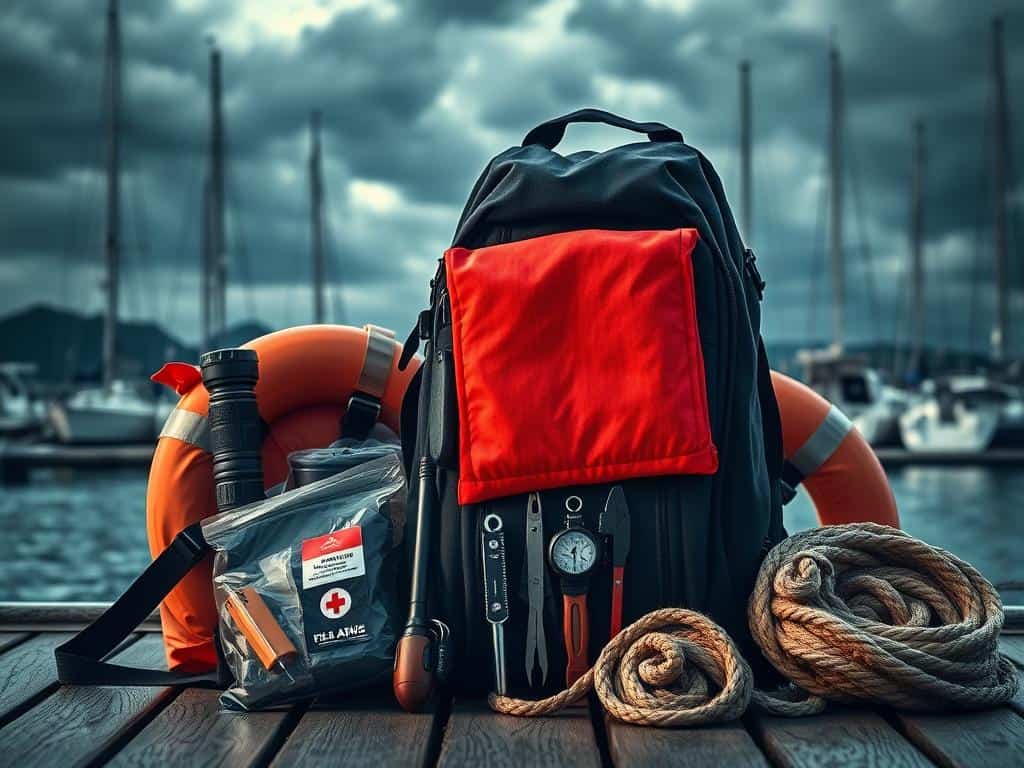
A good emergency kit is a must. I always carry a VHF radio, lifejackets for everyone, and a strong anchor system. These items boost safety and reliability in tough weather. I also check my gear often to prevent problems in bad weather.
Preparing the Crew for Heavy Weather
Talking to my crew about bad weather is important. I make sure they know their roles and what to do. We practice drills to get ready for safety procedures. This keeps everyone calm and efficient in bad weather.
Checking Weather Forecasts Before Departure
Checking the weather forecast before sailing is a must. I use apps and tools to stay updated. This helps me avoid bad weather. Staying alert to weather changes while sailing is also key to quick responses.
Immediate Actions When a Storm Hits
When a storm hits suddenly, quick action is key. Keeping my passengers safe is my main goal. I’ve learned that certain safety steps can greatly help us get through the storm.
Ensuring everyone wears life jackets is a must. I also make sure they move to safe spots on the boat. This helps prevent injuries.
As the storm gets worse, I adjust the sails to keep control. Slowing down and turning on lights are also important. This makes us visible to others nearby.
Using storm sails and reefing mainsails helps a lot. These techniques reduce the boat’s stress, keeping it steady in the storm. By taking these steps, I’m better prepared to handle the storm.
Conclusion
Effective sailing safety depends on being well-prepared and knowing about storm conditions. By learning to spot weather patterns and signs of bad weather, I can improve my storm navigation. Having the right gear and a prepared crew boosts our confidence in harsh weather.
Learning quick responses to storms and staying updated on boat handling is key. It’s also important to keep an eye on forecasts and share knowledge with other sailors. These steps make us more ready and skilled in dealing with severe weather.
Knowing how to manage bad weather makes sailing safer and more fun. I’m now ready to face any weather the sea throws at us. I can navigate through storms with confidence and skill.