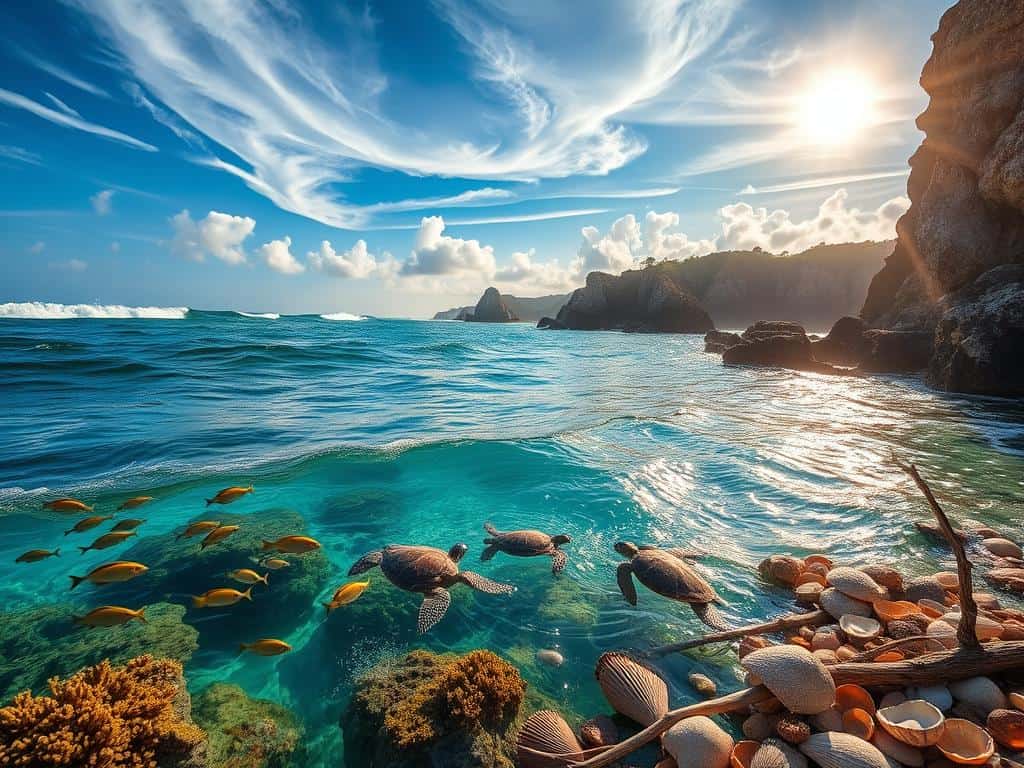
Standing on the research vessel Falkor, I felt the ocean’s vastness. Artists from everywhere were there, each with their own sea-inspired art. The waves and water’s colors sparked creativity in us.
Working with scientists, we went beyond just beauty. Our art showed the true spirit of discovery. It made me think of Katsushika Hokusai and Winslow Homer, who showed the sea’s beauty and power long ago.
In this small space, surrounded by endless sea, our art is more than just nature. It’s a shared experience.
Key Takeaways
- Ocean art captures the beauty and emotion of the sea.
- Marine-inspired artwork often emerges in collaborative environments.
- The ocean stimulates creativity in confined spaces like studios or ships.
- Historical artists like Hokusai and Homer have influenced modern ocean art.
- Sea-themed creations reflect both artistic expression and scientific discovery.
The Emotional Landscape of Ocean Art
Ocean art captures many human experiences, shaped by our bond with nature. The sea stirs feelings of peace, wonder, chaos, or deep thought. Looking at marine-inspired art, I see how the sea’s rhythms reflect our emotions.
The water’s state and the environment add emotion to art. This guides both the artist and the viewer on a path of feeling.
The Influence of Nature on Artistry
Nature deeply influences ocean art. Exploring marine-inspired art, the ocean’s changeability sparks creativity. A calm sea scene can calm us, while a stormy sea can stir turmoil.
Artists use these natural moments to express their feelings. Their art touches viewers deeply.
Diversity of Emotions in Sea-Themed Creations
Every ocean art piece shares a unique story, filled with different emotions. Artists’ techniques add to these feelings. For example, splattered paint can show chaotic waves, while soft watercolors bring calm.
This variety of emotions makes art more engaging. It invites viewers to connect with ocean-inspired art on a personal level.
Techniques and Materials for Creating Ocean Art
Exploring ocean art, I’ve learned that picking the right medium is key. It’s not just about how the art looks but also how it feels. Traditional oil paints bring out bright colors and depth. On the other hand, resin and alcohol ink offer a modern twist with their unique qualities.
Choosing the Right Medium
Choosing materials is a big part of my artistic process. Oil paints give rich textures and colors, while acrylics dry fast and are flexible. Mixed media in nautical crafts lets me mix techniques for a stronger impact. Trying out different mediums helps me show the ocean’s beauty and power in new ways.
Techniques to Capture Ocean Movement
Catching the movement of water is a big challenge in ocean art. I use layering with acrylics to add depth, like ocean waves. Sometimes, I use a palette knife to add texture, making it look like waves or tides. These methods help bring the ocean’s rhythm and flow to life, letting viewers feel its energy.

Conclusion
Ocean art is a mix of passion and nature. It lets artists like me share our feelings about the sea in unique ways. This art form connects us to the ocean’s stories.
Creating ocean art is exciting because of the many techniques and materials we can use. Whether I’m painting waves or serene horizons, it’s a journey of discovery. The ocean’s beauty inspires me to keep exploring.
Ocean art is more than just pictures of the sea. It’s a conversation between us and nature. Through our art, we tell stories, feel emotions, and appreciate the ocean. The ocean’s beauty will always inspire new art.