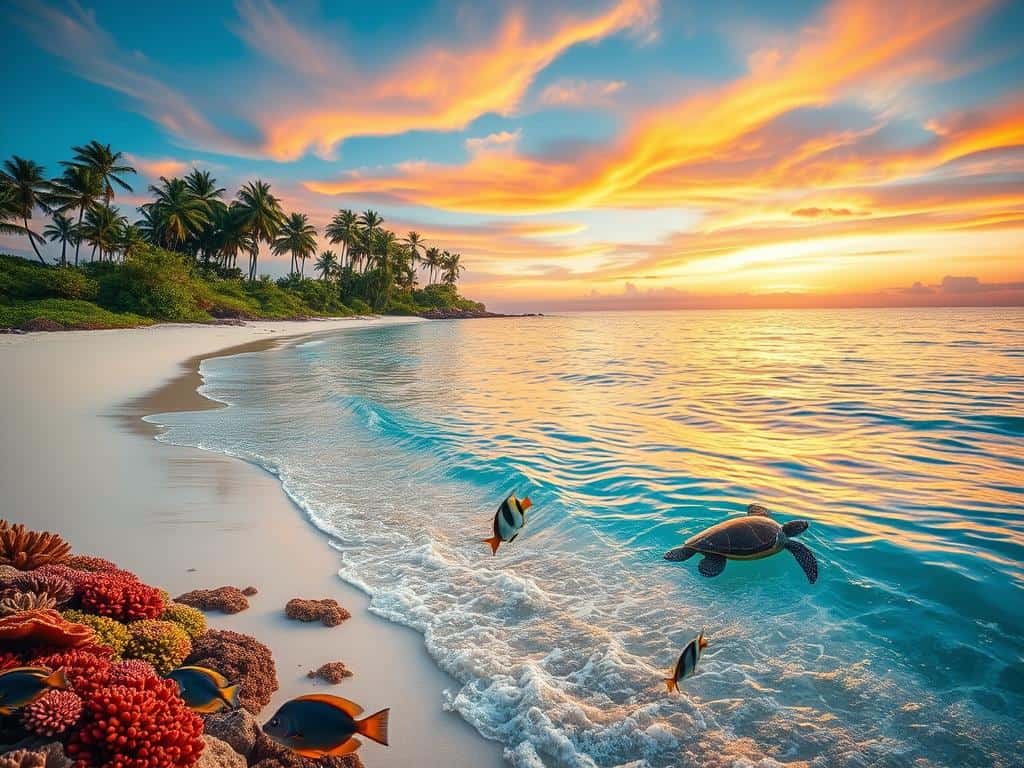
Last summer, while walking along a beach in my hometown, I noticed the beauty of the waves and the litter on the sand. I picked up a plastic bottle and some glass shards. This moment made me realize how important our actions are for the ocean.
The ocean is not just for fun; it’s essential for many species and our survival. I felt a strong urge to protect it.
Statistics show that over 8 million tons of plastic pollute our oceans every year. This harms marine life and habitats. But, there’s hope. We can all make small changes to help our oceans.
By following simple tips, we can make a big difference. Let’s look at practical steps we can take to keep our oceans healthy for future generations.
Key Takeaways
- Understanding the role of oceans is key for marine protection.
- Practicing sustainable living can make a big difference.
- Even small actions can lead to big changes.
- Plastic pollution is a major threat to ocean health.
- Supporting ocean protection policies is essential for long-term solutions.
Understanding the Importance of Ocean Conservation
The oceans cover over 70% of our planet. They are essential for life. They help regulate the climate, produce oxygen, and feed billions.
Oceans are more than just water. They help with nutrient circulation and weather patterns. Their health affects our health, food, and economies.
The Role of Oceans in Sustaining Life
Oceans are home to countless life forms, from tiny plankton to huge whales. They are key to the global food web and climate. Healthy oceans mean clean air and water for us.
Protecting the oceans is urgent. It’s not just about the environment; it’s about our survival.
Current Threats to Ocean Health
Unfortunately, oceans face many threats. Plastic waste is a big problem, with 8 million tons entering the oceans yearly. This harms marine life and ecosystems.
Overfishing disrupts ocean balance. Habitat destruction from coastal development and industry harms biodiversity. Over 80% of the world’s wastewater goes untreated into oceans, causing harm.
We need to act fast to protect the oceans. Collective action is needed to fight these threats.
Ocean Conservation Tips: Simple Actions for a Healthier Sea
Small actions can make a big difference for the ocean. Learning how to reduce plastic, support sustainable practices, and conserve water is key. By doing these things every day, we can all help protect the sea.
Reducing Plastic Pollution
Plastic pollution is a huge problem for our oceans. I use reusable bags, bottles, and straws to cut down on plastic. Seeing communities ban single-use plastics motivates me to push for change too. These changes help reduce pollution and encourage others to be eco-friendly.
Supporting Sustainable Seafood Practices
Choosing sustainable seafood helps our oceans and fights overfishing. I look for the Marine Stewardship Council (MSC) label when eating out. Apps like Seafood Watch help me make better choices, supporting the health of our oceans.
Conserving Water to Protect Marine Environments
Water conservation is vital to protect our oceans. Fixing leaks and using efficient appliances helps. These actions ease the strain on wastewater systems, benefiting marine life. Every drop counts in keeping our oceans healthy.
Practicing Proper Waste Disposal
Proper waste disposal is key to preventing ocean pollution. I recycle, compost, and dispose of hazardous waste safely. By managing waste well, we can keep our oceans clean for generations to come.

Integrating Eco-Friendly Habits into Daily Life
Adopting eco-friendly habits is key to protecting our oceans. Simple actions at home can greatly reduce our carbon footprint. This leads to a healthier planet and a cleaner ocean.
Making Mindful Choices at Home
Using eco-friendly products and energy-efficient appliances cuts down energy use. Choosing biodegradable cleaning supplies or avoiding single-use plastics helps our oceans. These small steps make me feel responsible for our ecosystems.
Community Involvement through Cleanups
Joining community cleanups helps protect our oceans and builds community bonds. Events like beach cleanups improve local areas and strengthen connections. Volunteering to clean up beaches shows my dedication to marine conservation.
Advocating for Ocean Protection Policies
I work to support policies that protect our oceans. Signing petitions, contacting lawmakers, and backing marine laws are important. My actions show the need for everyone to work together to protect our oceans.
Conclusion
Ocean conservation is vital for our planet’s survival. Our oceans are essential for life and face many challenges. Every action we take can help make a big difference.
By reducing plastic, choosing sustainable seafood, and supporting ocean protection, we can all help. These actions not only protect the ocean but also bring us together. They show how important it is for us to make a change.
Protecting our oceans is a task we all share. It’s good for marine life and for us. Let’s think about how we can help. Together, we can make our oceans healthier for the future.