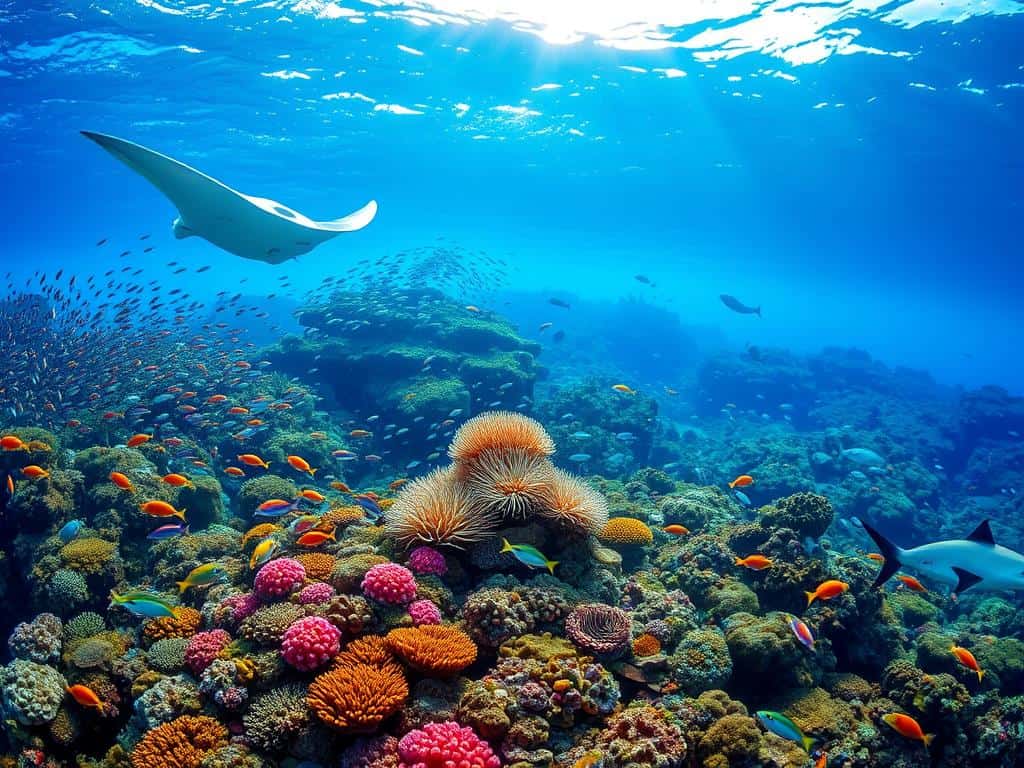
Standing on a rocky cliff, I looked out at the ocean. The waves crashed and sea birds cried above. It made me realize the ocean is full of life, even though we can’t see it all.
There are millions of unknown species in the ocean. Every time we dive, we find new wonders. My journey in marine biology is about learning and appreciating the ocean’s life.
Key Takeaways
- The ocean covers 71% of our planet and is rich with marine wildlife.
- There are potentially 1 to 2 million undiscovered marine species.
- Exploring ocean creatures is essential for understanding biodiversity.
- Every dive offers an opportunity to uncover new aquatic species.
- The health of marine ecosystems is key for our planet’s balance.
The Rich Diversity of Marine Wildlife
Exploring marine wildlife shows us complex ecosystems full of life. Marine biodiversity includes many species living in different ocean areas. Each species is important for the ocean’s health. Knowing this helps us use the ocean wisely and protect it.
Understanding Marine Biodiversity
Marine biodiversity is the variety of life in the ocean, from tiny plankton to huge whales. Every creature is vital for keeping the ocean balanced. Learning about marine life shows us how connected all species are, proving that every part is important.
Recent Discoveries of New Marine Species
Recently, finding new marine species has amazed us. Over 800 marine scientists work together, like in the Nippon Foundation-Nekton Ocean Census. They’ve found 866 new species, including colorful corals and unique mollusks. These discoveries help us understand the ocean’s diversity and show us how much is yet to be found.
The Role of Global Collaborations in Marine Exploration
Global marine exploration shows the power of working together. Scientists from everywhere share their knowledge and resources, making big discoveries. The Ocean Census plans to find over 100,000 new species in the next decade. This shows how important teamwork is in protecting our oceans.
Significant Marine Species and Their Unique Traits
The ocean is full of important marine species. They play key roles in their ecosystems. Each new find helps us learn more about marine life and its value.
For instance, some marine gastropods have special toxins. These could change how we treat pain. This shows how marine life and human health are connected.
New Discoveries and Their Ecological Importance
Recently, we found amazing species like the pygmy pipehorse. It can hide very well. This skill helps it survive in places with lots of predators.
New species help keep their ecosystems balanced. They control populations and keep things stable. We need to protect marine life because it’s so important for our planet.
The Threat to Marine Life and Conservation Efforts
Unfortunately, marine life faces big threats today. Climate change and human actions harm their homes and increase extinction. Groups like the Ocean Census say many species might disappear before we even know they exist.
We must find and learn about these species fast. Knowing them helps us protect marine life and adapt to climate change. It’s key to saving our planet’s biodiversity.
Conclusion
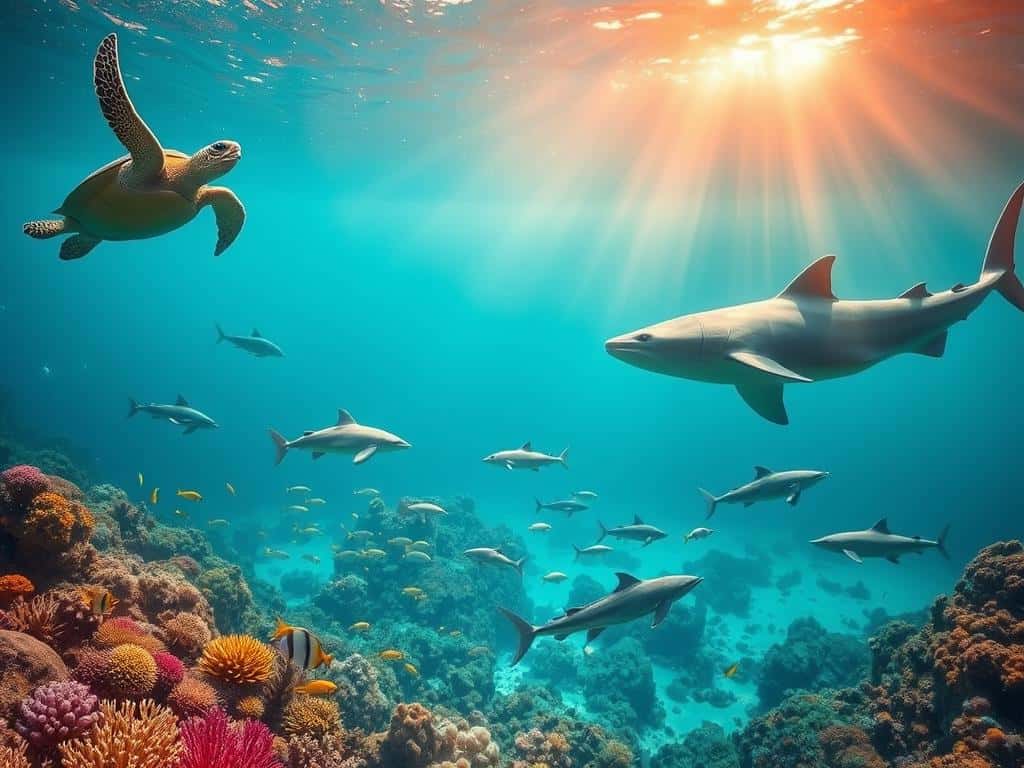
Looking at the vastness of marine wildlife, I see how key it is to understand these underwater worlds better. The Ocean Census shows us the amazing diversity under the sea. Each find not only adds to our knowledge but also shows how urgent it is to protect these places.
As we work to document and protect marine life, we face big challenges. But by realizing how important marine wildlife conservation is, we can make a difference. This effort will help ensure the ocean stays full of life for future generations.
The ocean is a vast, unexplored part of our planet, full of secrets and possibilities. I hope our ongoing efforts in marine exploration will uncover these mysteries. This way, we can protect these vital habitats and keep the ocean healthy.