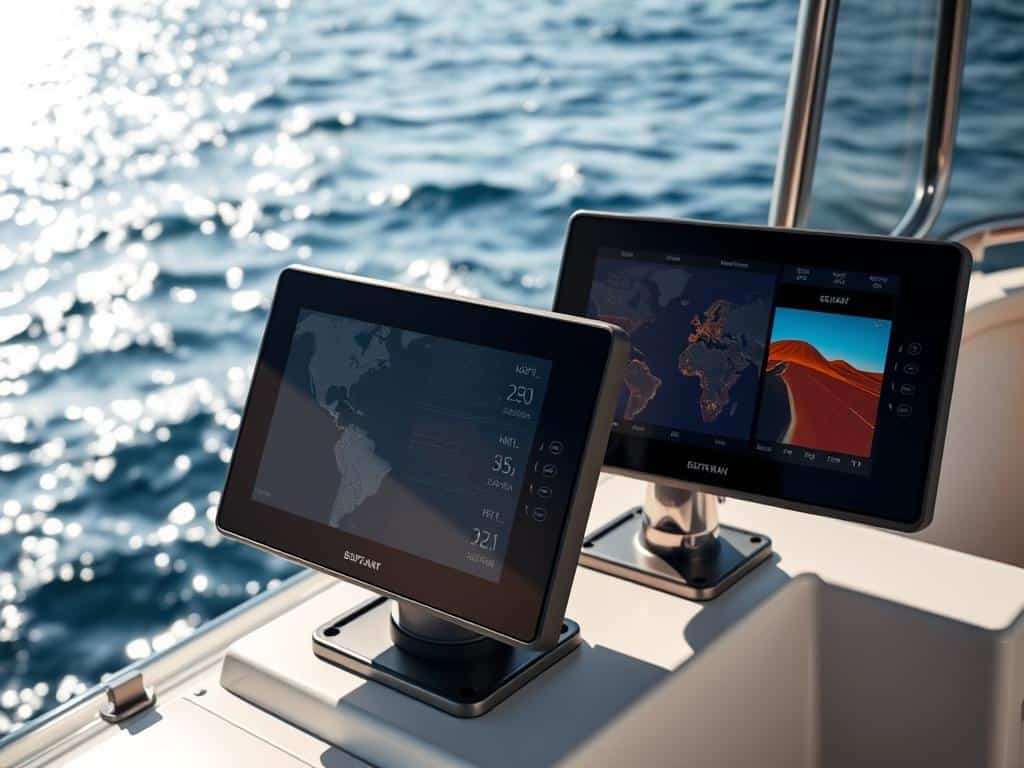
As I stood on my boat, the sunlight sparkled on the water. I was amazed at how boating has changed. A few years ago, navigating was hard and needed a lot of focus. Now, new tech is changing how we use the water.
Boats don’t need experienced captains anymore. Smart tech and gadgets let anyone enjoy boating, even if they’re new.
In 2025, these changes are not just helpful but also good for the planet. Boats now use renewable energy and automation. This makes boating safer and more efficient than before.
I’m excited to share these trends with you. They’re making the ocean more accessible to everyone.
Key Takeaways
- Marine tech trends are revolutionizing how we experience boating.
- Innovative technology simplifies navigation and enhances safety.
- Smart gadgets increase accessibility for boaters of all skill levels.
- Sustainable practices are becoming integral in the boating industry.
- Electric propulsion offers an eco-friendly alternative to traditional engines.
- Automation technology is changing the landscape of marine travel.
Innovative Marine Technology Shaping the Future of Boating
The boating world is on the verge of a big change. New technologies are making our time on the water better and more fun. Self-driving tech, electric boats, hybrid propulsion, and smart features are leading this change.
Self-Driving Navigation Systems
Self-driving systems are set to change how we navigate. They use AI, GPS, and sensors to plan routes and avoid obstacles. This makes boating safer and easier, even in busy waters.
Electric and Hybrid Propulsion
There’s a growing demand for green boating options. Electric and hybrid boats are becoming more common. New battery tech lets these boats go further and charge faster. They’re quieter and cleaner, making boating better for the environment.
Smart Boat Integration
Smart features in boats let owners control them better. You can check fuel levels and adjust settings from anywhere. This tech makes boating more convenient and luxurious.

2025 Marine Tech Trends that Enhance Safety and Exploration
The marine industry has seen big changes in recent years. These changes make boating safer and more exciting. With new hull materials, renewable energy, and underwater tech, 2025 promises a lot for boaters and explorers.
Advanced Hull Materials
New materials like carbon fiber and graphene are changing boat building. These materials make boats lighter and stronger. They also save fuel and protect against the sea’s harsh conditions.
Now, boats can fix themselves with special coatings. This means less damage from salt and sun. It makes boats last longer and keeps everyone safer on the water.
Renewable Energy Integration
Boats are turning to solar power and other green options. By 2025, solar cells will fit easily into boat designs. This means boats can power themselves, cutting down on fossil fuel use.
Underwater Exploration Technology
New tech like drones and sonar is making it easier to explore the ocean. These tools help map the sea floor and make underwater adventures fun. Soon, more people will dive into marine exploration and eco-tourism, loving our oceans even more.
Conclusion
Looking at marine tech trends for 2025, we see a big shift towards sustainability and new tech. These changes aim to make boating better for both users and the environment. With new features like self-driving boats and electric motors, boating is becoming safer and more fun.
Smart tech and green energy are also making waves in boating. These advancements are not just for experienced boaters but also for newcomers. They open up a world of possibilities for sustainable boating, changing how we see our oceans.
The future of boating is exciting and full of promise. As we adopt these new technologies, boating will become more about adventure and less about harm to our oceans. Each innovation brings us closer to a greener, more sustainable boating future for all.