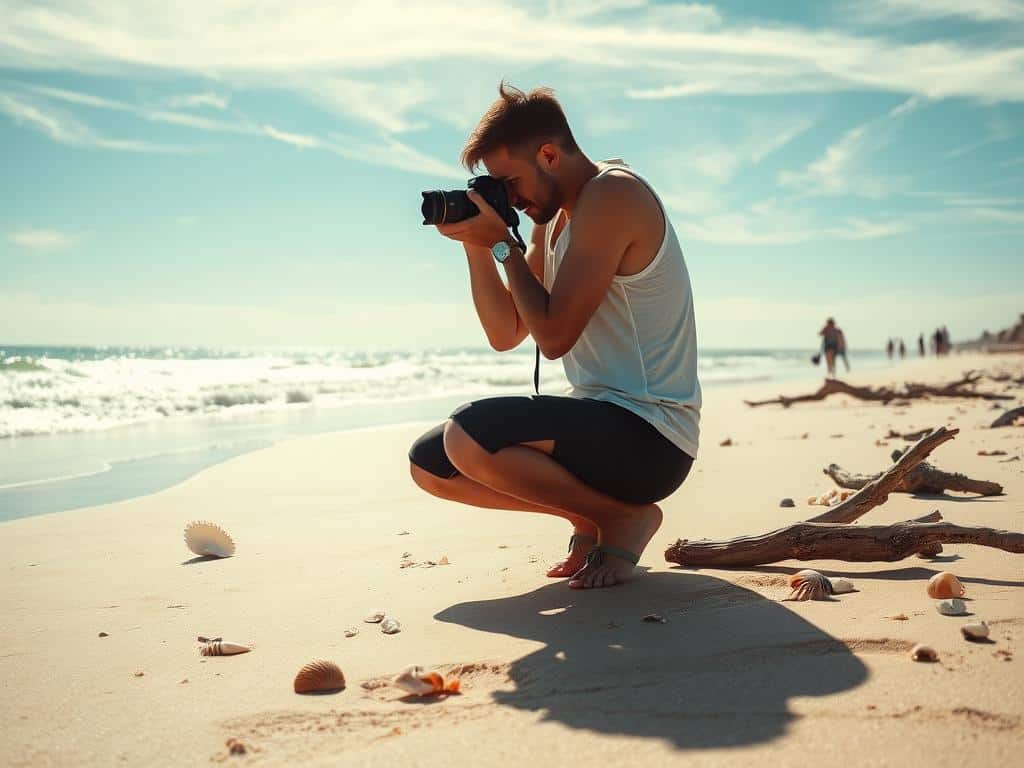
On a recent summer trip, I found myself at a picturesque beach. The sun was dipping low, casting golden rays across the waves. I was armed with my camera, feeling excited yet challenged by the unique environment of shoreline photography.
The gentle breeze danced through my hair as I watched families play in the surf. Couples shared quiet moments, eager to capture their joy through my lens. Each click of the shutter aimed to immortalize the scenery and the deep sense of serenity a day at the beach brings.
Through practical beach photography tips and an understanding of light and composition, I knew I could translate these fleeting moments into stunning compositions. These compositions would transport viewers back to that tranquil shore. In this article, I will share valuable insights to enhance your beach photography skills and ensure you capture the essence of your beach adventures.
Key Takeaways
- Understand the unique challenges of beach photography.
- Utilize natural light to enhance your shoreline shots.
- Explore composition techniques for captivating visuals.
- Shooting in RAW preserves image quality.
- Experiment with different camera settings for optimal results.
- Plan for fluctuating weather conditions.
Understanding Light in Beach Photography
Light is key in beach photography. Different lighting techniques can change a simple scene into a stunning image. The golden hour is my favorite time to shoot. It offers a soft, warm light that makes colors pop and reduces glare.
Utilizing Golden Hour
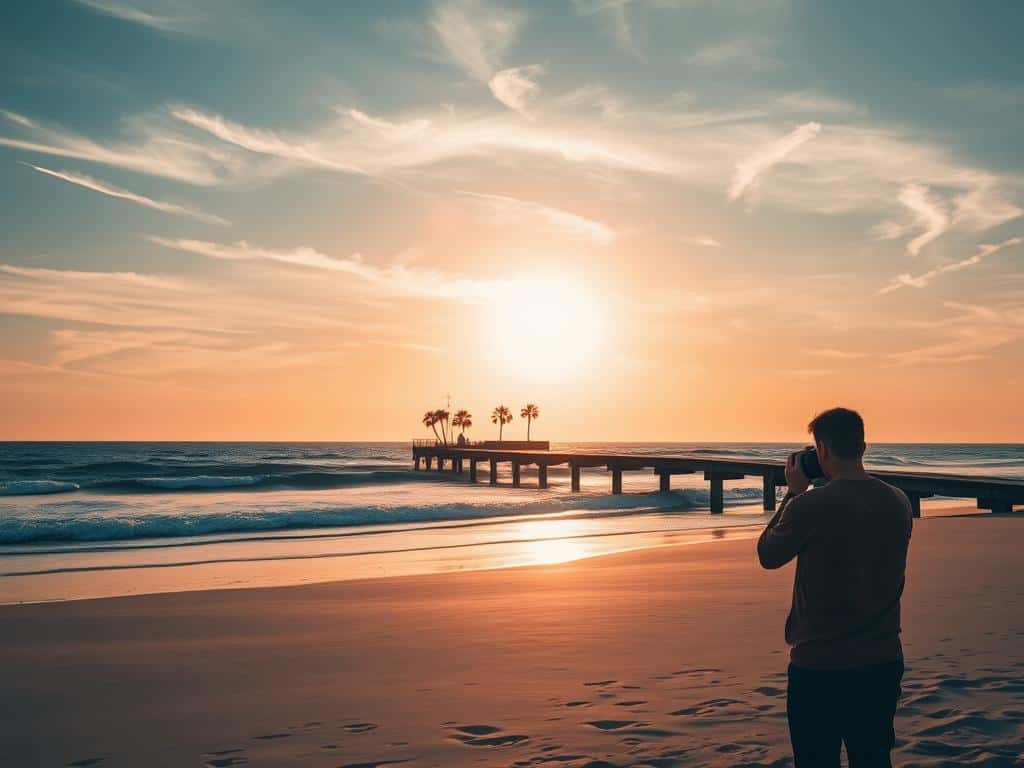
The golden hour happens right after sunrise and before sunset. It’s perfect for beach photos because of its gentle light. I love taking pictures of people against the setting sun, adding an artistic flair. This way, I can show the beauty of the beach in a serene way.
Manipulating Exposure
Controlling exposure is important in bright beach scenes. Sand and water can make photos too bright. By adjusting my camera’s settings, I avoid overexposure and keep subjects clear. Learning these techniques helps me take amazing photos that truly capture the beach’s spirit.
Essential Beach Photography Tips
To improve my beach photos, I focus on a few key areas. I learn about camera settings, composition, and shooting in RAW. These skills help a lot from start to finish.
Shooting in RAW
Shooting in RAW is a big plus. It keeps more image data than JPGs. This is key for adjusting light and colors in bright beach scenes.
With RAW, I can tweak exposure and colors without losing quality. It’s great for handling the sun’s strong light.
Composition and Focal Points
Good composition can change a photo. Choosing the right focal point draws the viewer in. It tells the story of the scene.
Using lines or natural frames adds depth and interest. For example, rocks or sea oats can frame the view. They highlight the beach’s beauty.
Camera Settings
Knowing how to use camera settings is vital. Adjusting shutter speed lets me catch the wave’s movement. Changing aperture affects the background blur.
By adjusting settings for the beach, I get photos that truly show its spirit. Every shot is full of life and color.
Conclusion
Mastering beach photography means understanding lighting, composition, and camera settings. Using the right tips, I can capture the beauty of the coast. This results in memorable moments and stunning photos that show the true essence of each scene.
Whether I’m taking family portraits or capturing a sunset, these strategies improve my skills. Being creative and open to trying new things helps me create lasting memories. Each beach visit becomes a chance to celebrate the scenery through my lens.
Logistics like timing and weather are also key for successful beach photos. Planning well and using the knowledge from these tips ensures my photos capture the beach’s vibrant energy. This way, I create photos that I’ll treasure for years.