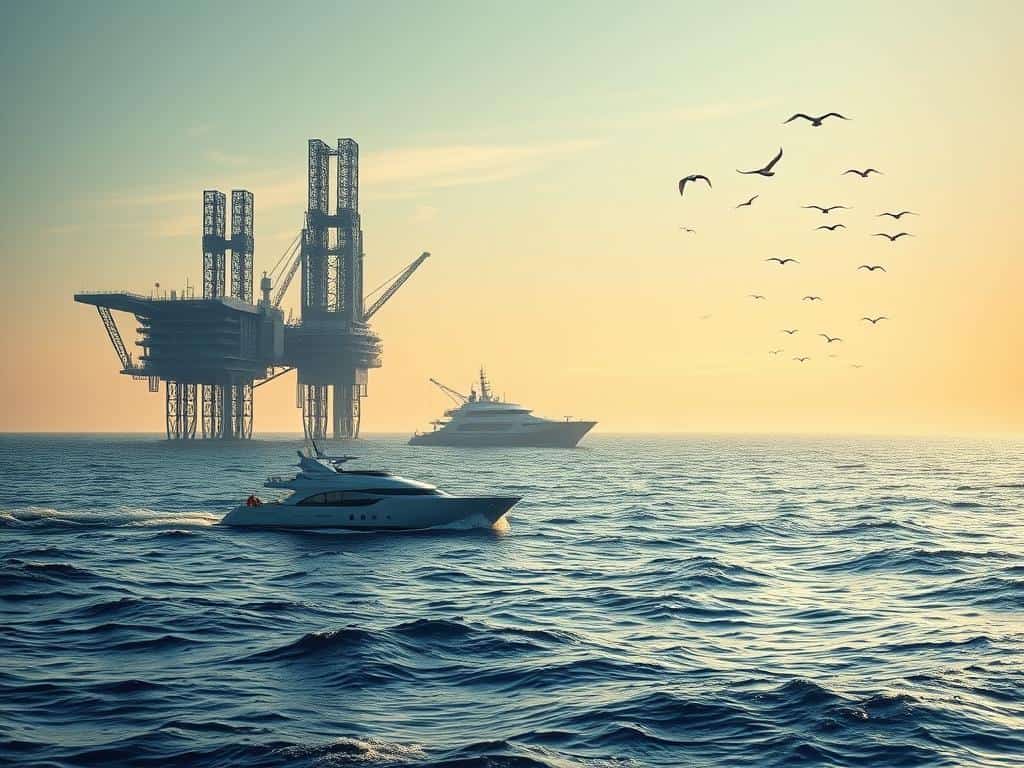
As I stood on the deck of a vibrant eco boating business, I looked out at the ocean. It was full of life and possibilities. Last summer, I met with a local fishing community in Florida.
They told me about their switch to sustainable maritime commerce. They were excited about the Blue Economy’s market opportunities. They said it could help save marine ecosystems while boosting the economy.
This change is more than a trend; it’s a must for our oceans. Today, I want to dive into the blue economy trade’s untapped possibilities. It offers a chance for a strong, sustainable future.
Key Takeaways
- The Blue Economy focuses on sustainable exploitation of marine resources.
- Ocean economy business offers new avenues for economic diversification.
- Investing in sustainable maritime commerce can address social needs.
- Protecting marine ecosystems is essential for future generations.
- Coastal areas play a vital role in global trade dynamics.
Understanding the Blue Economy Concept
The blue economy is a new way to manage our oceans. It uses sustainable practices that help global trade and economic growth. This approach helps us use the ocean’s power while keeping it safe.
Definition and Scope of the Blue Economy
The blue economy uses marine resources in a sustainable way. It includes fishing, tourism, and shipping. It aims to protect the ocean and support strong economic growth.
It promotes responsible fishing, sustainable tourism, and clean shipping. These are key for the ocean’s and economy’s long-term health.
The Global Relevance of Blue Economy
Blue economy efforts are important worldwide, but more so in Africa. They can fight poverty and inequality. Countries are starting to use sustainable development in their coastal areas.
Nigeria is working on sustainable governance for its coast. This shows how marine resources can help solve social and economic problems. The African Integrated Maritime Strategy (AIMS) 2050 also plays a big role. It tackles illegal fishing and pollution, making sure the ocean helps the economy thrive.
Blue Economy Trade: The Untapped Market Opportunity
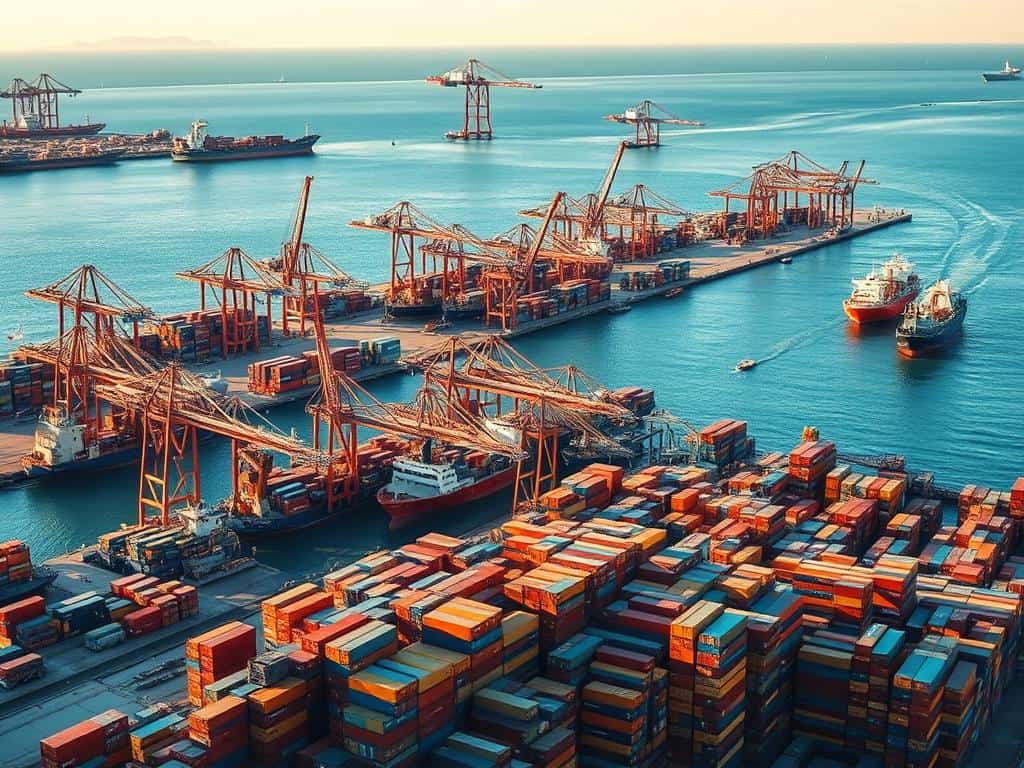
The Blue Economy offers a huge chance for economic growth. It includes areas like aquaculture, maritime transport, and eco-friendly boating. These sectors can create jobs and improve food security in coastal areas.
Effective policies are key to growing these industries. They help turn these opportunities into reality.
Potential Sectors for Investment in the Blue Economy
The maritime industry is a big player in economic growth. Investing in fishing, shipping, and tourism tech can lead to sustainable development. This is very important in Africa, where many people live by the coast.
Investing in the Blue Economy can help fight poverty and protect the environment.
Challenges Facing the Blue Economy
Despite its promise, the Blue Economy faces many challenges. Issues like illegal fishing and pollution harm marine life. Climate change makes managing marine resources even harder.
It’s important to engage communities and have good governance. Poor management is a big barrier to using the ocean’s resources fully.

Conclusion
We are on the edge of a big change in the blue economy trade. The opportunities are huge, ready to be used with care and new ideas. Areas like fishing, tourism by the coast, and shipping have a lot of room to grow.
Working together is key. Governments, investors, and local groups must join hands. This way, we can manage resources well and tackle big problems. It will help our economies grow and keep our oceans healthy.
Thinking about the future, the blue economy is more than just making money. It’s about creating jobs and making communities stronger. By choosing sustainable ways, we can keep our oceans healthy for the next generations. This shows the blue economy is a smart and needed choice for us all.