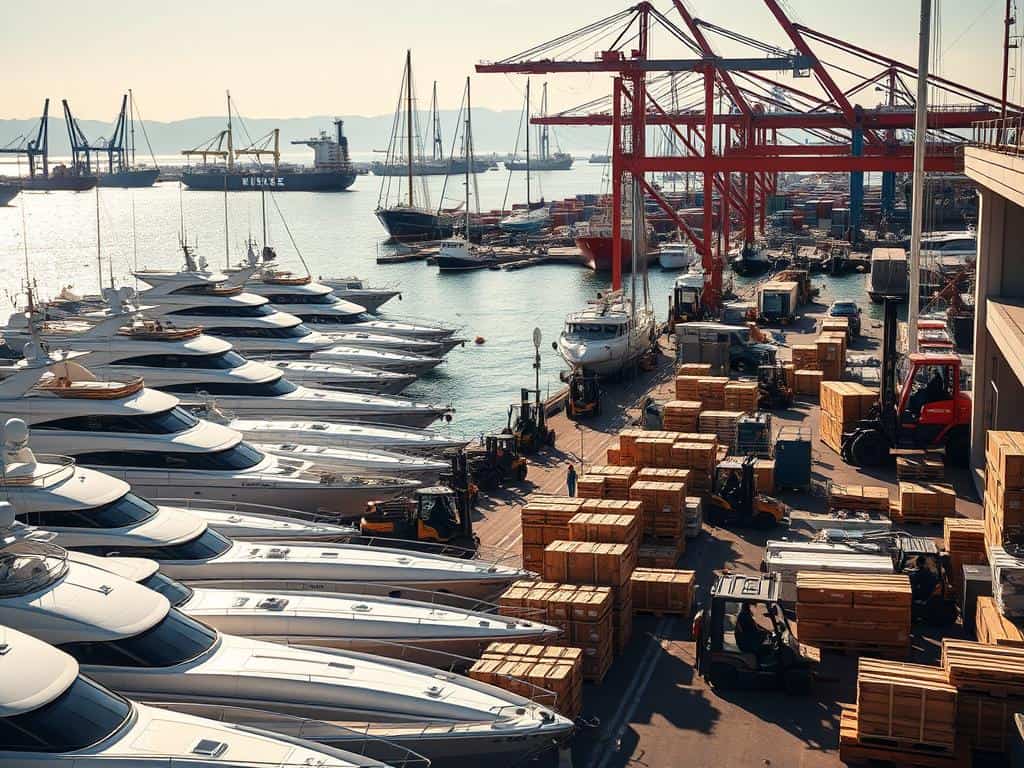
Starting my nautical startup, I learned how key the marine supply chain is. Imagine standing at the dock, watching a yacht get ready for its first trip. It took hours, resources, and teamwork to get there. The smooth process behind it was thanks to a well-run marine supply chain.
This network connects shipbuilders, manufacturers, and logistics providers. It’s not just about moving goods. It’s about making the yacht transport business and international boat trade efficient and green. For new entrepreneurs in marine logistics, understanding this is key to succeed.
Key Takeaways
- The marine supply chain is essential for the success of nautical startups.
- Efficiency in yacht transport hinges on collaborative efforts among key players.
- Sustainability practices in marine logistics are increasingly important.
- Understanding international regulations can help navigate global trade.
- Embracing technology can optimize supply chain operations.
- Identifying challenges early can help mitigate risks in the marine sector.
Understanding the Marine Supply Chain
The marine supply chain is key for any nautical startup. Knowing how it works helps make smart decisions. It covers all steps from getting products to sending them out, keeping things running smoothly.
Definition and Importance for Nautical Startups
The marine supply chain has many stages, like getting products, moving them, and storing them. For nautical startups, understanding this is very important. It helps with managing costs, logistics, and being green. This chain is very important for a startup’s success and growth.
Key Components of the Marine Supply Chain
The marine supply chain has a few main parts. Transporters move goods, and storage places keep them safe until they’re sent out. New tech helps manage data and track things, which is key for better logistics. Each part is important for making marine logistics work well for nautical startups.
The Role of Technology in Modern Marine Logistics
New tech is changing marine logistics. Things like AI and data analytics make things run better and are kinder to the planet. Startups using these tools can track their carbon footprint and plan to be more sustainable. Companies like Marine Digital show how this works, helping startups deal with today’s logistics challenges.
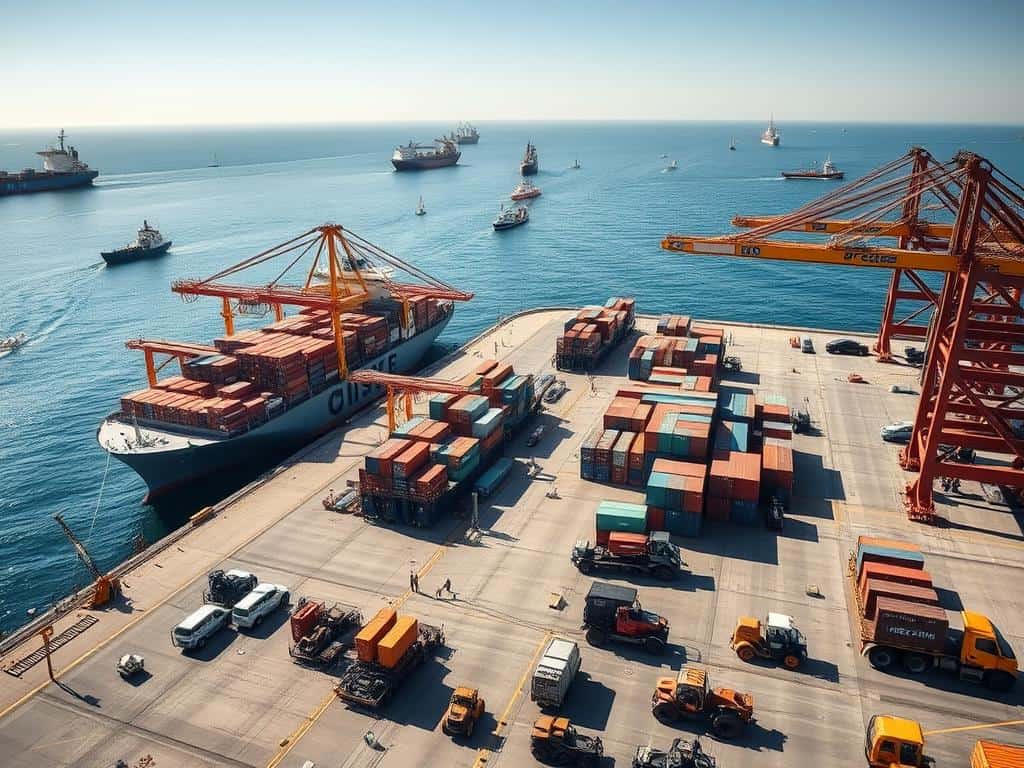
Challenges in Yacht Transport Business and International Boat Trade
Starting a yacht transport business or entering the international boat trade is tough. It’s full of obstacles. Knowing these challenges is key to success in a competitive world.
Common Obstacles Facing New Nautical Ventures
Startups in yacht transport face high costs and unpredictable demand. Logistical problems add to these issues, causing delays. To stay afloat, I need to find solutions to these problems early on.
Geopolitical Influences on Marine Logistics
Geopolitical events greatly affect marine logistics. The Russo-Ukrainian war, for example, has messed up supply chains. It’s important to keep up with global trade news to plan ahead.
The Need for Sustainability and Compliance
Rules on sustainability and compliance are getting stricter. Startups must keep up. By focusing on reducing waste and tracking carbon, I meet legal standards and attract eco-friendly customers. This boosts my brand’s image and ensures I follow the law.
Conclusion
Understanding the marine supply chain is key for nautical startups. It helps them deal with the complexities of the international boat trade and yacht transport. Knowing these details lets entrepreneurs plan their strategies well and face challenges directly.
By focusing on sustainable practices and using the latest technology, I can improve my startup’s efficiency. This also helps me stand out in a market that values eco-friendliness. As maritime logistics change, being able to solve problems and use new solutions will be vital.
This is a thrilling time for new businesses in the nautical field. A well-organized marine supply chain offers big chances for growth. I’m sure that by following these principles, I can ensure a successful future in maritime logistics.