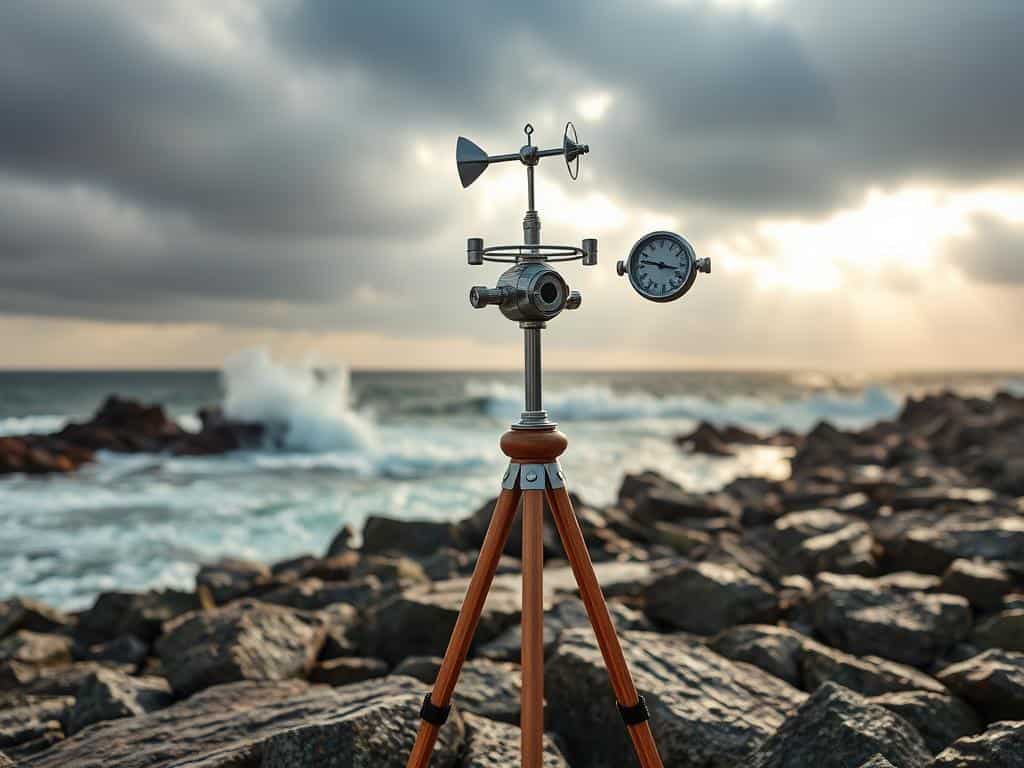
One brisk morning, I stood on my sailboat, gazing at the horizon. The forecast said clear skies, but dark clouds and swirling winds soon followed. This made me realize I needed more than a weather app.
I started looking into DIY marine weather stations. With simple materials and some creativity, I could measure wind and tide from my boat. This guide will show you how to build your own marine weather stations for accurate outdoor monitoring.
Key Takeaways
- Building DIY marine weather stations enhances outdoor weather monitoring.
- Accurate wind and tide measurements are essential for safe boating.
- Crafting your own weather tools can be fun and rewarding.
- Essential components include anemometers, weather vanes, barometers, and rain gauges.
- Staying informed about weather changes can improve your sailing experience.
Understanding Marine Weather Stations
Marine weather stations play a key role in collecting vital weather data for sailors and maritime operators. These devices are made to gather real-time information. They help sailors make safe decisions while on the water.
What Are Marine Weather Stations?
Marine weather stations are special devices that monitor the atmosphere and send out weather data. They give important details like temperature, humidity, wind speed, and rain levels. This helps sailors understand the weather conditions that might impact their trips.
Importance of Accurate Weather Forecasts for Mariners
Weather data accuracy is very important for sailors. Accurate forecasts can save lives and prevent financial losses. Marine weather stations help provide the data needed for these forecasts.
Components of a Marine Weather Station
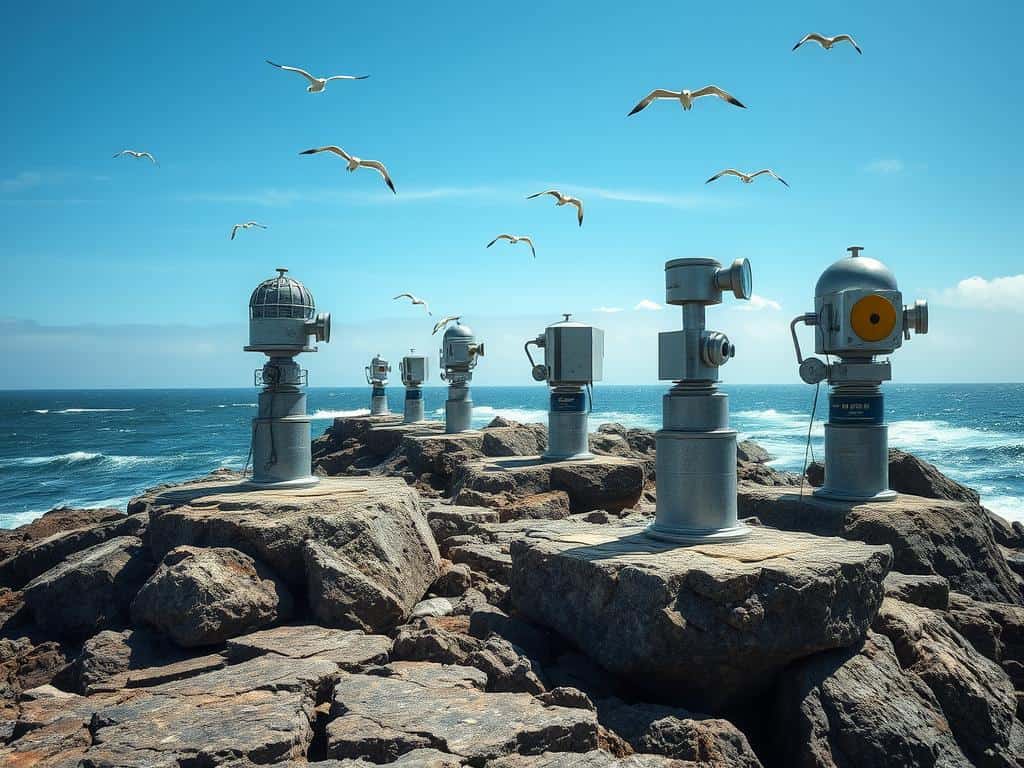
A marine weather station has several important parts. It includes anemometers for wind speed, barometers for pressure, and rain gauges for rain. These parts work together to give a full picture of the weather, helping sailors stay safe.
How to Build Your Own Marine Weather Station
Building my own marine weather station was a fun and learning experience. I found out that with the right materials and a simple guide, making weather instruments is easy. This part will show you the key parts, like the anemometer, weather vane, barometer, and rain gauge. Let’s get into the details.
Materials Needed for Your DIY Project
To make a DIY marine weather station, you need some basic items. You’ll need PVC pipes, plastic cups, a base, a protractor, and a notebook for logging. Also, get a clear plastic bottle for the barometer and a container for the rain gauge. Having these ready will make building easier.
Step-by-Step Guide to Constructing Key Instruments
Building weather instruments step by step is easy. Here’s a guide to making each important part, ensuring they work well for my marine weather observations.
Building an Anemometer for Wind Speed
To make an anemometer, start with four lightweight cups and two PVC poles. Attach the cups to the poles in a cross shape. Drill a hole and add a dowel for free rotation. This lets me measure wind speed by counting rotations.
Creating a Weather Vane for Wind Direction
For the weather vane, start with a simple arrow from cardboard or plastic. Attach it to a vertical pole that can turn. Make sure it’s balanced and at the top of another pole for easy wind direction reading. Painting the arrow bright colors helps it stand out on a boat.
Setting Up a Barometer to Measure Atmospheric Pressure
The barometer needs a few extra parts. A clear plastic bottle works well for the sensor. Connect a balloon to the top and watch it move with pressure changes. It’s a simple yet effective way to measure pressure.
Constructing a Rain Gauge for Rainfall Measurement
To build a rain gauge, cut a plastic bottle in half. Invert the top half into the bottom to collect rain. Mark the sides for measurements to record rainfall accurately. This tool is great for tracking weather patterns over time.
Conclusion
Exploring DIY marine weather stations showed me it’s more than a hobby. It’s a vital tool for water lovers. These homemade tools give me key data that makes my time on the water better. They help me understand weather changes that could affect my trips.
Weather monitoring is incredibly beneficial. My DIY station lets me track wind, direction, rain, and pressure. This info helps me stay safe while sailing or fishing. It makes me ready for whatever the weather brings.
Building a DIY marine weather station makes me a better sailor. It makes me appreciate the weather’s impact on my sea adventures. Whether it’s a calm day or rough seas, I’m always ready with the right weather info.